

Stress-Free Scheduling for Longarm Quilters: Mastering the Wait List
When you first start a longarm quilting business, it’s easy to dream big. You imagine quilts stacked high, customers lined up, and a steady stream of work that keeps you happily stitching day after day. It sounds wonderful, doesn’t it?
But reality can be a little different. Without a system in place, that dream can quickly turn into stress. Suddenly you’re juggling too many quilts, missing deadlines, and dreading the next phone call from a client asking, “Is my quilt ready yet?”
The good news? It doesn’t have to be that way. With a little planning and the right scheduling system, you can create a manageable wait list that keeps your business busy and your sanity intact.
I’ve owned and operated a longarm quilting business for nearly eight years. One of the biggest challenges I faced early on was figuring out how to schedule quilts and maintain a wait list that worked for me—not against me. Over time, I developed a system that balanced workload, client expectations, and my own quilting joy.
Today, I’m sharing what worked for me so you can build a stress-free system that keeps your longarm business thriving.
Why a Wait List Matters
A wait list is more than just names on a page. It’s a tool that helps you:
✅ Keep your schedule realistic
✅ Avoid over-promising and under-delivering
✅ Protect your love of quilting by preventing burnout
✅ Build client trust and professionalism
Remember: if you aren’t quilting, you aren’t making money. But if you’re quilting too much, you’ll quickly lose the joy that drew you to the business in the first place. A wait list helps you find that balance.
Step 1: Know Your Quilting Times
This is where most quilters go wrong—they guess.
Don’t guess.
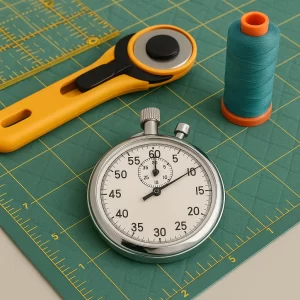
If you want an accurate wait list, you need accurate data. That means timing yourself.
For one to two months, track your quilting times. Write down:
Quilt size (length × width)
Type of quilting (allover, custom, show quality, etc.)
Loading/unloading time
Binding or backing prep (if offered)
Step 2: Decide How Many Hours You Really Want to Work
It’s tempting to say, “I’ll quilt 40–50 hours a week.” But be honest with yourself.
Do you actually have that many hours available once you factor in family, guild meetings, teaching, errands, and, you know… life?
Decide on a realistic weekly number and stick to it. Once you know your average quilting times, you can subtract from your available hours until you hit zero. When your schedule is full—stop booking.
That’s how you avoid those painful calls where you have to tell a customer, “I’m sorry, your quilt isn’t finished yet.”
Step 4: Build in Wiggle Room
Quilts are like people—no two are the same.
Some are easy. Others are… let’s just say “problem children.” We’ve all seen them:
Wavy borders
Blocks that puff out
Seams that don’t quite meet
These take longer, and you need to account for that. For new clients, I recommend doubling the estimated time until you know their work. Once you’ve quilted for them a few times, you’ll have a better idea.
You can also invite new clients to bring their quilt in before you commit to a timeline. This lets you assess the work upfront.

Step 6: Never Commit Without Writing It Down
This is a big one.
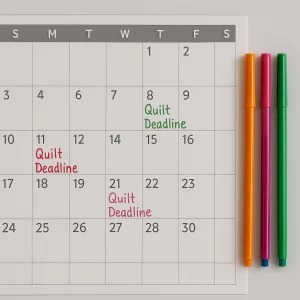
Clients will catch you at guild, at the store, or on the phone when you don’t have your calendar in front of you. Don’t fall into the trap of saying, “Sure, I can get that done next month.”
If it’s not entered into your system, it doesn’t exist.
Instead, politely tell them:
You’ll take their contact info and call once you’re back at your studio
Or give them your business card and ask them to follow up
Trust me, this one tip alone will save you endless headaches.
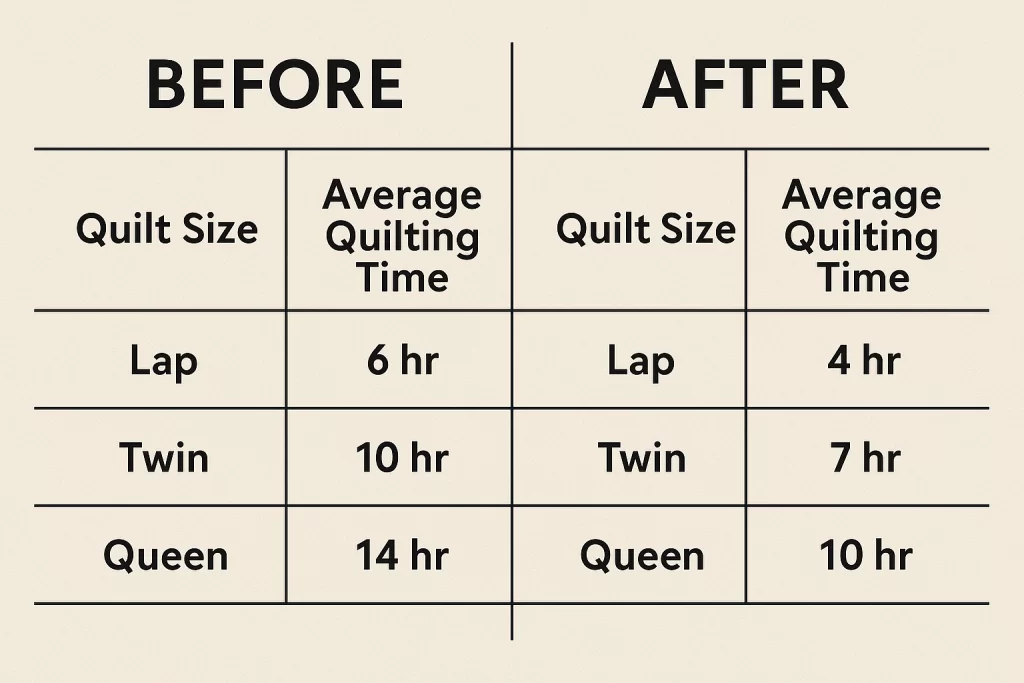
Once you have a few quilts logged, you can calculate your average quilting time per square inch.
Here’s a quick example:
Quilt size: 80″ × 80″ = 6,400 square inches
Quilting type: custom
Time spent: 8 hours (480 minutes)
Now divide: 6,400 ÷ 480 = 13 minutes per square inch
With this formula, you can predict how long future quilts will take by reversing the math:
(Length × Width ÷ Avg minutes per sq. inch) ÷ 60 = Estimated hours per quilt
This simple calculation can save you from scheduling nightmares.
Step 3: Pick Your Scheduling System
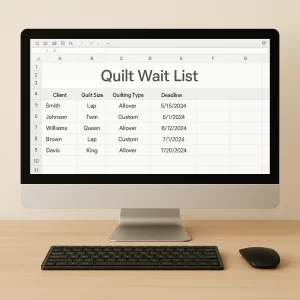
You don’t need fancy software (though it can help). I personally use Machine Quilter’s Business Manager because it’s designed for our industry, but an Excel spreadsheet works just fine.
Your system should track at least:
Client name and contact info
Quilt size
Type of quilting requested
Deadline (if any)
Estimated hours (using your formula)
Pro tip: mark whether the client is flexible or has a firm due date. This helps you rearrange quilts if life throws a curveball.

Step 5: Handle Surprises with Grace (and Boundaries)
Sooner or later, a client will schedule one quilt and show up with three. Or they’ll book a “lap quilt” that turns out closer to queen size.
Here’s the key: stay polite, but firm.
You are allowed to adjust their timeline. You are allowed to say no. And if they want you to squeeze in extra work, you are absolutely allowed to charge a rush fee.
This isn’t about being difficult. It’s about protecting your schedule and your sanity. Remember: their lack of planning should not become your emergency.
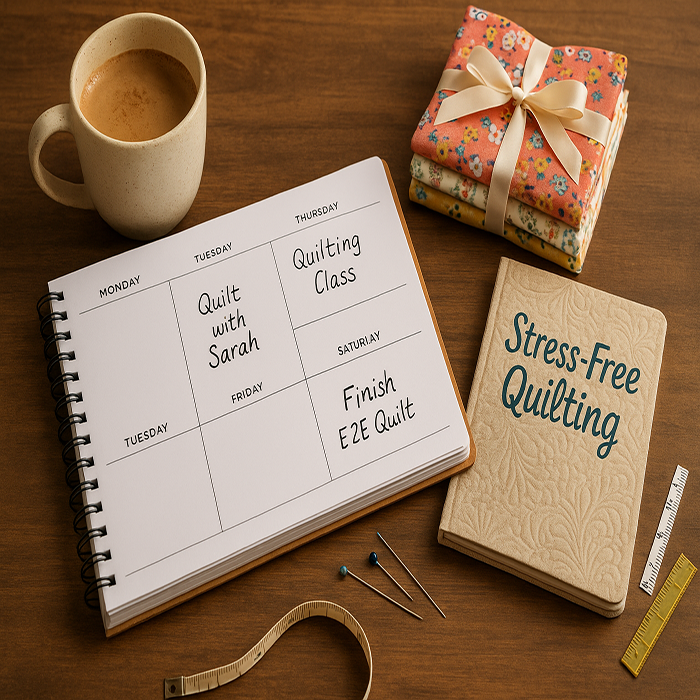
Step 7: Recheck and Adjust
As you get more experienced, your quilting speed will improve. That means your averages will change.
Recalculate your times every 6–12 months to make sure your estimates stay accurate. This will help you avoid accidentally under scheduling yourself, and it might even open up more room on your wait list.
Putting It All Together
A well-run wait list helps you:
Set realistic expectations
Deliver on time (without burnout)
Build professional trust with your clients
Keep quilting fun, not stressful
The more accurate your system, the easier it gets. And once your clients see how reliable and consistent you are, they’ll appreciate your professionalism even more.
Final Thoughts
Starting and running a longarm quilting business is exciting, but it’s also a juggling act. A wait list isn’t just a business tool. It’s your safety net. It protects your time, your creativity, and your love of quilting.
The key is to track your times, set realistic work hours, and never commit unless it’s written down. With these habits in place, you’ll find yourself confidently managing your queue instead of drowning in deadlines.
Your Turn!
Do you already use a wait list for your quilting business?
What system works for you?
Have you ever had a “problem child” quilt that threw off your schedule?
I’d love to hear your tips and stories in the comments below! 👇
Have more questions about starting your own Longarm Business. Check out my post How to Start a Longarm Quilting Business: A Step-by-Step Guide for Beginners
Special offer-I personally love Machine Quilters Business Manager. It’s made for longarm quilters and includes customer databases, quilt logs, intake forms, and financial tracking. It even lets you add your logo, create waitlists, email your clients, upload pics of clients quilts and more! Having it all in one place is a huge time-saver—and makes your accountant very happy come tax season.
Want to save $25 off a purchase of the MQBM Software? Enter your email address and click get code.
(Limited time offer, affiliate link may apply)
Stress-Free Scheduling for Longarm Quilters: Mastering the Wait List Stress-Free Scheduling for Longarm Quilters: Mastering the Wait List Stress-Free Scheduling for Longarm Quilters: Mastering the Wait List Stress-Free Scheduling for Longarm Quilters: Mastering the Wait List Stress-Free Scheduling for Longarm Quilters: Mastering the Wait List Stress-Free Scheduling for Longarm Quilters: Mastering the Wait List Stress-Free Scheduling for Longarm Quilters: Mastering the Wait List Stress-Free Scheduling for Longarm Quilters: Mastering the Wait List Stress-Free Scheduling for Longarm Quilters: Mastering the Wait List Stress-Free Scheduling for Longarm Quilters: Mastering the Wait List Stress-Free Scheduling for Longarm Quilters: Mastering the Wait List Stress-Free Scheduling for Longarm Quilters: Mastering the Wait List Stress-Free Scheduling for Longarm Quilters: Mastering the Wait List