What to Know Before Buying a Longarm Quilting Machine
So you’ve decided you might want a longarm quilting machine. Maybe you’ve been quilting for years—finishing your tops by hand, wrangling them through your domestic machine, or sending them off to a professional longarmer. But now? You’re ready to bring the magic home.
I get it. Owning your own longarm is a game-changer. But it’s also a big decision—this is not a toaster oven. It’s an investment of money, time, space, and, let’s be honest, emotional commitment. There are so many brands, features, and opinions floating around, it’s easy to feel overwhelmed before you even sit down/stand at a machine.
This guide isn’t about telling you which brand to buy—it’s about helping you ask the right questions so you can find a machine that fits you. Not just your quilts, but your space, your body, and your quilting goals.
🧵 What Will You Use It For?
Are you looking to finish your own projects at home? Maybe you’re thinking about quilting for hire. This is where your machine journey begins. If you’re only doing 10 or 20 quilts a year, there are excellent midarm machines and domestic sit-down options that might suit you just fine.
But if you’re thinking about quilting more regularly, or starting a business, you’ll want something sturdier and more versatile. That likely means a commercial-grade longarm with the biggest frame, and throat space, you can afford, and fit in your space.
And just like with sewing machines, you get what you pay for. That awesome promo priced starter setup might look good now, but it could end up being frustrating, and costly, if you outgrow it in six months.
📏 Let’s Talk Frame Size (And Why It Matters More Than You Think)
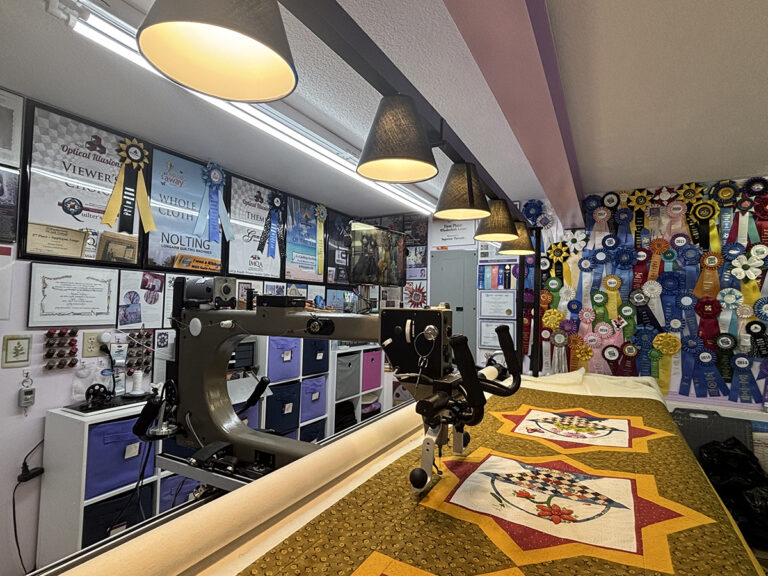
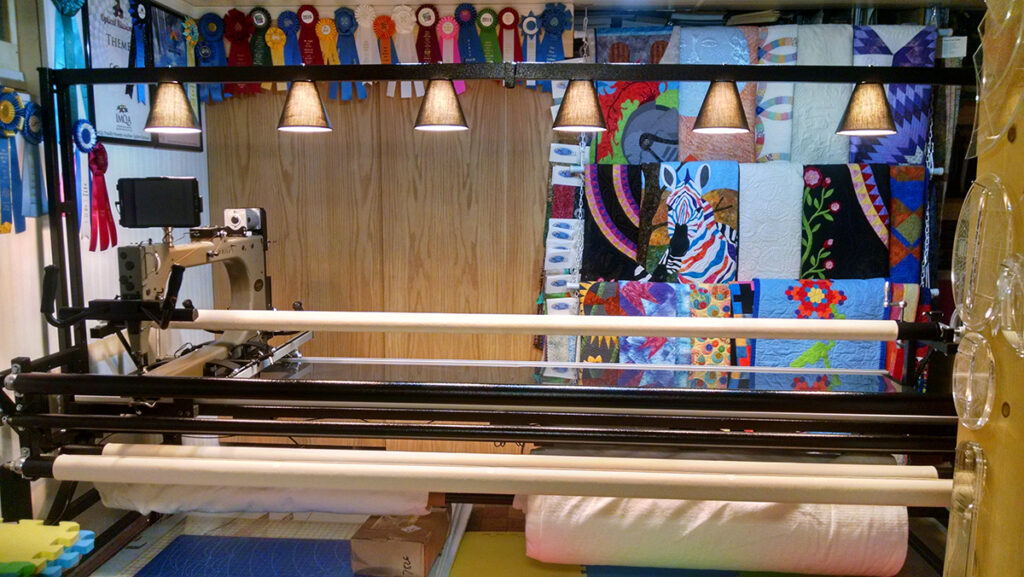
The frame is where things get real. I mean, you can’t just tuck a longarm into a closet when you’re not using it. My frame is a 14-footer—but in reality, it takes up about 15 feet of space in my studio once you factor in movement space and clearances.
An “8-foot frame” doesn’t mean you can quilt an 8-foot quilt. Nope. You lose usable width to clamps, take up levers, and leader widths. Most machines lose about 6–10 inches on either side—sometimes more, depending on the model. So your actual quilting space might be closer to 6.5 feet on an 8-foot frame. That’s a big deal, if you ever want to quilt larger quilts.
If you’re thinking about quilting professionally, get the biggest frame your space can reasonably handle. You might only do a few kings a year, but trust me—you do not want to turn down a customer because their quilt doesn’t fit your frame.
And don’t forget about depth. You need enough room around the frame to move comfortably. You’ll need at least two feet on either side and behind the machine to work properly, and ideally more, if you’re running pantographs, as you will be standing behind the machine head at the back.
.
🔍 Throat Size: Bigger Isn’t Just for Tall People
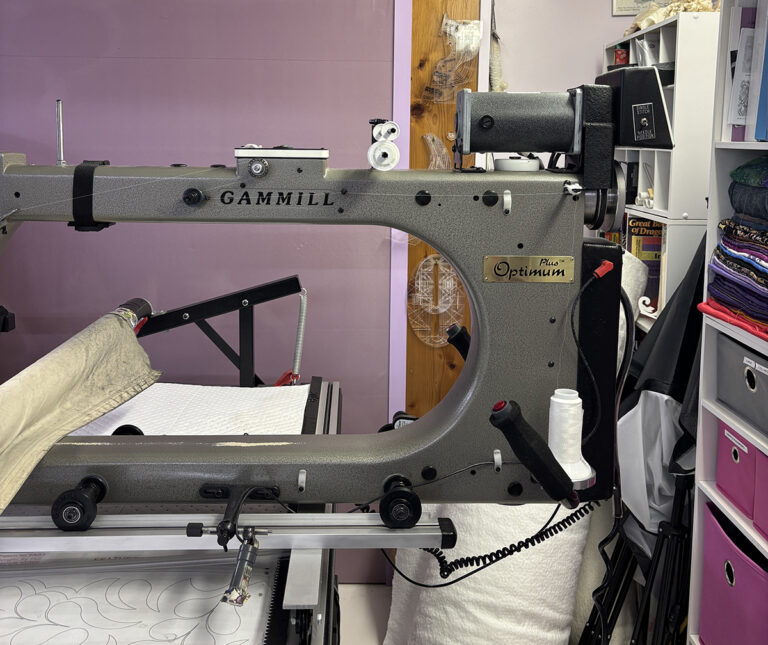
Now let’s talk throat space—that’s the distance between the needle and the machine body.
Here’s something you might not expect: I’m vertically challenged. (Not a secret to anyone who has met me in person.) But I still use a 30″ machine head—and I absolutely love it. Why? Because I want to see the whole design.
A bigger throat gives me room to stitch larger motifs, quilt more square inches at a time, and plan more complex designs without stopping constantly to roll the quilt forward. You don’t need a 30″ workspace, but if you’re doing big, open designs, or just like seeing more of your canvas while you quilt, a bigger head makes it easier. It’s not just about reach—it’s about visibility and flow.
And don’t let anyone tell you you’re too short for a big machine. You just need to plan your setup right, maybe add a small platform or stool, and make sure your machine is set to a height that works for you. (More on that below.)
🤸♀️ Height, Comfort, and Belly Bar Blues
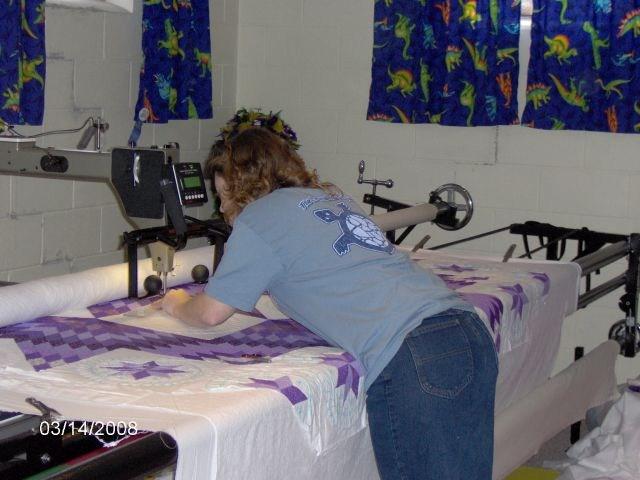
Who else out there is tired of leaning across a stabilizing bar above the belly bar like you’re reaching into a chest freezer? Yep, been there. Not all machines are created equal when it comes to comfort—especially for those of us under 5’3″.
Some machines have a bar or frame that rests above your quilt top. If you’re shorter, this can be a pain (literally). I recommend trying a few machines in person to see how they feel. And ask: Is the bar removable? Adjustable? Fixed in place? It makes a difference.
If multiple people will be using your machine—say, you’re sharing it with a taller friend or letting your kids/grandkids try it—consider investing in hydraulic lifts. They let you raise and lower the entire machine with the touch of a button. It’s a luxury, sure, but if you’re switching between pantographs (done from the back, needs a higher setup) and custom work (done from the front, lower is better), or if you switch between standing and sitting while doing dense custom work, those lifts are worth their weight in gold.
🧰 Add-Ons: Which Features Are Worth It?
This is the part where it’s easy to get swept away. Every machine dealer has shiny attachments, flashy upgrades, and the promise of quilting perfection, if you just add one more thing. But here’s the truth: not every feature is worth it for every quilter.
I always tell people—buy for how you quilt today, and plan for how you might quilt tomorrow. Start with the features that support the way you already work, then think about what might grow with you.
Here are a few upgrades I do think are worth serious consideration:
Stitch regulator – A must-have if you’re doing custom work or ruler quilting. It keeps your stitch length consistent even when your movement isn’t.
Micro handles – I personally love these. They give you better control when you’re doing fine detail work or quilting tight curves.
Ruler base – If you’re using quilting rulers, you’ll need a sturdy, well-fitting base to support them. This isn’t optional—it’s essential.
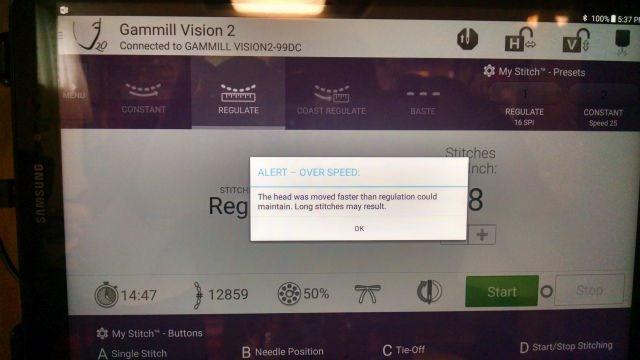
Now, let’s talk about computerized quilting. I’ll be honest—I don’t use a computerized system myself for custom work. I enjoy the hands-on, artistic side of quilting too much. But for some quilters—especially those with mobility challenges or chronic pain—computerization can be a real game-changer. It takes the strain out of maneuvering a heavy machine and can help you produce high-quality work with less physical effort.
That said, computerized systems are not just “push a button and walk away.” There’s a significant learning curve involved—learning the software, setting up designs, tweaking the alignment, troubleshooting when things go a little sideways. It’s not impossible, but it’s not magic either.
So before you make that leap, ask yourself:
Will I use it often enough to justify the cost?
Am I comfortable learning the tech (or willing to take classes)?
Does this solve a real problem in my quilting workflow?
Some of these features can be added later—so don’t feel pressured to buy everything right away. Make a list of must-haves, nice-to-haves, and “maybe someday” items. That way, you can invest wisely and grow into your machine without regret.
🔧 Don’t Forget Maintenance and Support
Even the best machines need TLC. Ask yourself:
Are you comfortable doing your own maintenance?
Is there a dealer nearby who services your brand?
Do they do house calls?
What happens if your machine breaks and you’re on a deadline?
If you’re not super mechanically inclined, having a great dealer relationship is everything. Good dealers don’t disappear after the sale. They offer support, classes, and help you troubleshoot when something’s not quite right.
🧪 Test Drives Aren’t Optional
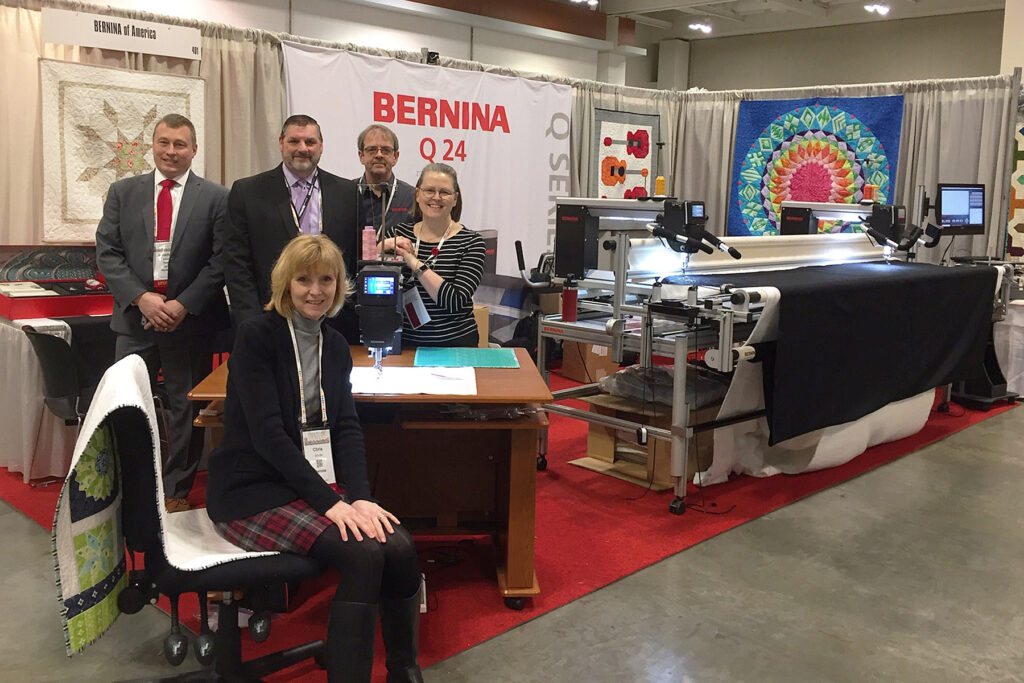
The best way to find the right machine? Try them. All of them. Go to a big quilt show or visit a few dealerships. Spend time stitching—not just doodling on a sample but really quilting like you would at home.
And don’t feel bad for asking questions. This is a big purchase, and you deserve to get it right. Every machine has a learning curve, and no two stitch exactly the same. The one that feels “just okay” to your friend might feel perfect to you.
💬 Final Thoughts
Buying a longarm isn’t just about getting a new piece of equipment—it’s about investing in your creativity, your quilting future, and honestly, your workflow. But that doesn’t mean everyone has to use it the same way.
Some quilters dream of quilting every top themselves—and that’s fantastic! But I also have numerous customers who own longarms and still send their quilts out to be quilted. Why? Because they realized they’d rather spend their precious quilting time piecing, not learning a whole new machine. And that’s 100% okay.
Longarms come with a learning curve—sometimes a steep one. You’re not doing it wrong if you decide that curve doesn’t fit your life or your quilting goals. Whether you want to dive in and custom quilt every feathered border, or simply enjoy the piecing process and outsource the finishing—you’re still a quilter. Full stop.
At the end of the day, buying a longarm is a personal decision. Take your time. Ask questions. Try different machines. And most importantly, make the choice that supports the kind of quilter you want to be—not the one Instagram says you should be.
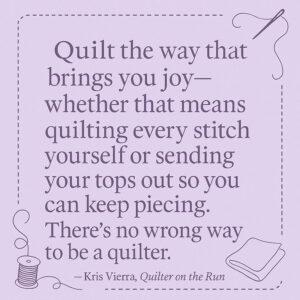
You don’t need permission—but just in case you do—here it is: quilt the way that brings you joy.
longarm quilting machine longarm quilting machine longarm quilting machine longarm quilting machine longarm quilting machine longarm quilting machine longarm quilting machine longarm quilting machine longarm quilting machine longarm quilting machine longarm quilting machine longarm quilting machine
Excellent information. Thanks.
Glad you liked it.