From Inspiration to Infringement: What Every Quilter Should Know About Copyright
Have you ever hesitated before posting a picture of your quilt? Or wondered whether you could sell a quilt you made from someone else’s pattern?
You’re not alone. Let’s talk about copyright in the quilting world, and the do’s and dont’s.
What Is Copyright, Really?
Copyright is a legal right granted to the creator of an original work. This includes patterns, quilt designs, photos, and tutorials. It gives the artist exclusive control over how that work is used, shared, or sold.
Since 1989 in the U.S., all original works are automatically protected the moment they are created, even without the © symbol. This means that if a quilt design, pattern, or photo is someone else’s original creation, you can’t use or share it without permission—even if you “change it a little.”
✅ Key Point: There’s no “magic percentage” of changes that makes something copyright-free. If it’s recognizable, it’s protected.
Can I Use Someone Else’s Work for Inspiration?
Yes, but it’s not that simple. Quilters often find inspiration in artwork, photos, or other quilts. If you want to base your work on someone else’s creation, the ethical and legal route is to get permission in writing. Here’s how:
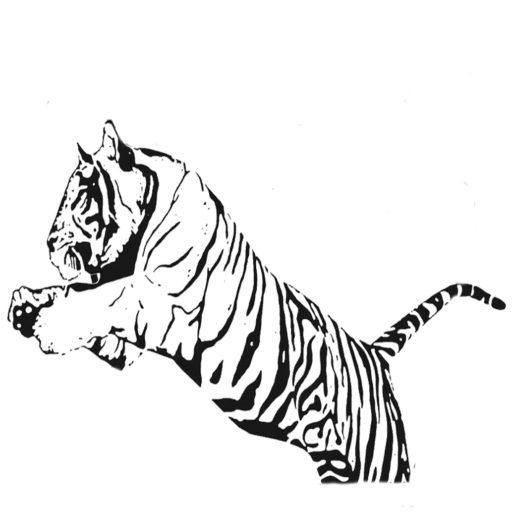
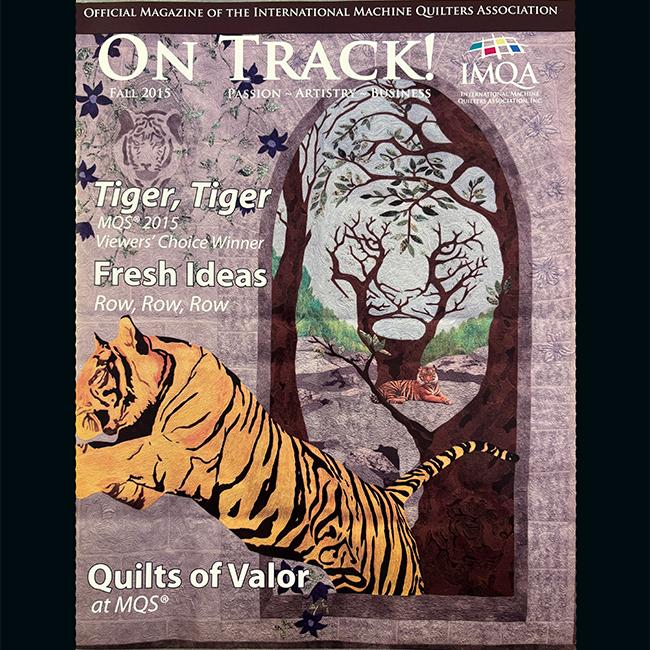
Track down the original artist (not always easy if the image was reposted online). The illustration that was the inspiration for Tiger, Tiger took me weeks to track down the original artist. It was all over the web, but no one was crediting the artist.
Be clear about how you plan to use the derivative quilt (personal use, entering shows, publishing, etc.).
Get written permission for all intended uses. Most national/international quilt shows require this before they’ll consider your entry.
- Be prepared for the artist to say “no”. Accept this graciously. It’s their right.
💬 Have you ever tracked down an artist to ask for permission? Share your experience in the comments—we’d love to hear how it went!
How Do I Protect My Own Work?
While your quilt is automatically protected, filing with the U.S. Copyright Office gives you stronger legal rights—especially if someone infringes on your work.
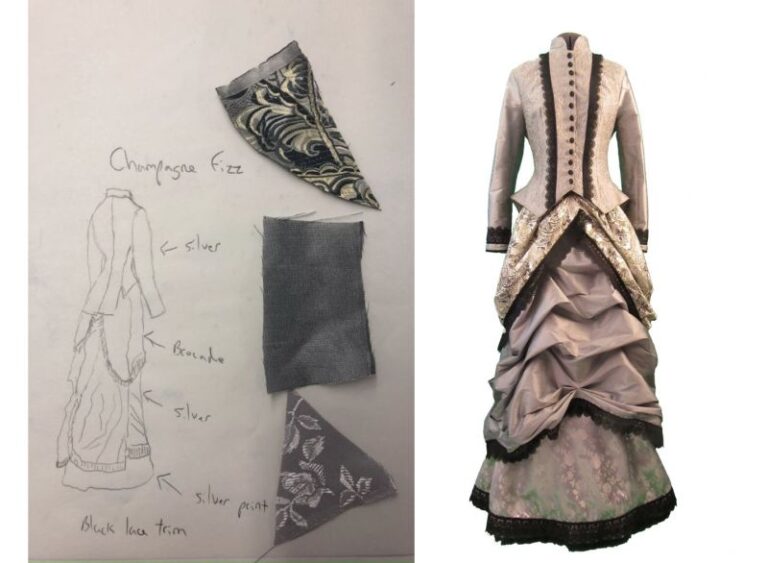
Document your process with sketches, photos, and dates.
Register your copyright through the U.S. Copyright Office.
Watermark your photos before sharing them online, placing the mark where it’s hard to crop out.
📷 Pro Tip: Include a visible watermark on your quilt photos and post them alongside a description that credits you as the designer.
What If I Just Used a Commercial Pattern?
Even if you bought a pattern, that doesn’t mean you can do anything you want with it.
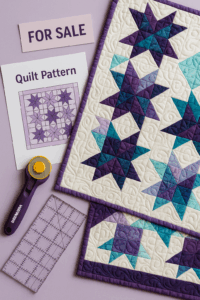
Most commercial patterns come with a license for personal use only. But what exactly does this mean?
✅ You can make the quilt for yourself.
🚫 You can’t show it publicly without permission.
🚫 You can’t sell the finished quilt unless otherwise specified.
🚫 You can’t make copies of the pattern for friends or students.
If you plan to sell a quilt made from someone else’s pattern, one ethical option is to charge only for your construction services, while the customer buys the pattern directly, or you can add the price of the pattern to your cost and buy a new pattern with each quilt.
💡 Have you ever sold a quilt made from a pattern? How did you handle permissions? Let us know below.
What About Handouts and Class Materials?
Sharing class materials or workshop handouts, even for free, is a serious copyright violation. These resources are part of how instructors make a living. Sharing them undermines their income and may discourage them from teaching at all.
In fact, U.S. law classifies the distribution of over 10 unauthorized copies (or those with a market value of $2,500+) as a felony.
🙅♀️ Just because it’s educational doesn’t mean it’s free to share. Always ask first.
What Isn’t Covered by Copyright?
❌ Names and titles (these are protected under trademark law, not copyright)
❌ Ideas, methods, and techniques (you can copyright the way a method is written up, not the method itself)
❌ Commonly known or traditional quilt blocks like the Ohio Star or Lone Star Note: even though the block is public domain, if someone creates a unique setting, that’s copyrighted.
❌ Tools or rulers (these need a patent, not copyright)
🧵 Tip: You can copyright your tutorial on a new applique method—but not the actual technique itself.
Quick Recap: Dos & Don’ts
| ✅ Do | ❌ Don’t |
|---|---|
| Credit original creators | Assume online = free |
| Ask for permission in writing | Modify someone’s design & claim it’s yours |
| Register your work if you plan to enforce your rights | Share class handouts or patterns |
| Use royalty-free or licensed designs | Sell or show quilts made from patterns without asking |
Want to Dive Deeper?
One of the best resources for navigating copyright questions is the Ginger Davis Allman copyright flowchart. It’s clear, practical, and designed for crafters.
Join the Conversation
🧵 Have you ever had your work copied or misused without permission?
🧵 Do you watermark your quilt photos?
🧵 Have you gotten permission to use someone else’s artwork in your quilt?
👇 Share your story in the comments or tag me on Instagram @quilterontherun1 with the hashtag #QuiltCopyrightTalk
inspiration to infringement inspiration to infringement inspiration to infringement inspiration to infringement inspiration to infringement inspiration to infringement inspiration to infringement inspiration to infringement
I have gotten permission to use another artist’s work in a quilt. One was an illustration in a story book the other was a page from an “adult coloring” book. The first took some time to find the right contact information, but both gave me emailed permission to use as I described. For me that was to make a quilt and to show it but not sell it.
Finding the right contact info can be tricky. It can involve a lot of research. I’d love to see a picture of the quilts.
I am trying to obtain permission now for a pixilated quilt inspired by the coloring book-mystery mosaics by Celeste Starling there is no publishing information on the book -it is a self published book. I’ve gone to her website on facebook but have gotten no response.
That’s rough. Have you tried sending a message through her amazon author account? Good Luck 🙂