
Build Your Quilting Brand Online: Easy Website and Facebook Tips for Beginners Part 1
Whether you’ve just unboxed your first longarm machine or you’ve been quilting for hire for years, one thing is true: you can only quilt for the customers who can find you.
You’ve already done the in-person hustle: guild meetings, quilt show and tell, chatting with local quilt shops, maybe even running an ad in your local paper (if you still have one). But what happens when you want to reach customers outside your zip code?
That’s where the internet becomes your best quilting buddy.
A recent study found that over 85% of people use the web to find goods and services. Phone books? A thing of the past. In fact, over 70% of my own customers found me online proof that even in a hands-on, tactile craft like quilting, digital visibility matters.
The good news? You don’t need to be a tech wizard to get started. You just need the right tools and a willingness to try.
Why Your Quilting Business Needs an Online Presence
Think of your online presence as the world’s largest quilt show — open 24/7, to anyone, anywhere.
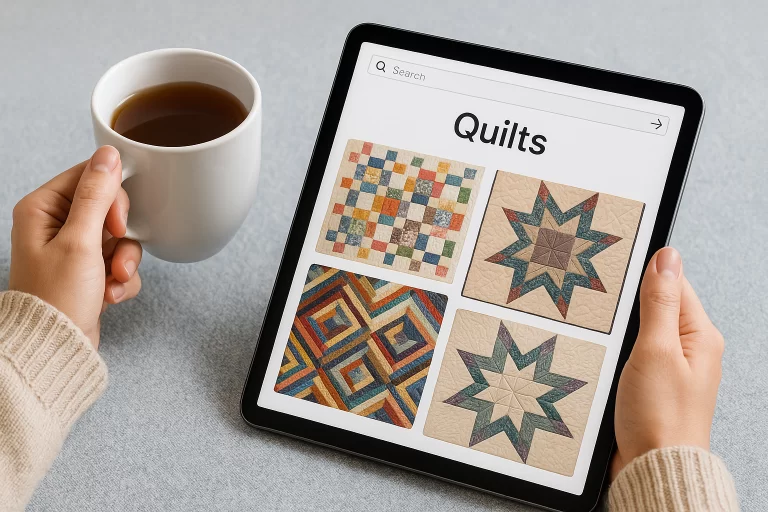
It’s where people are looking. Quilters, fabric lovers, and potential customers are scrolling through their phones while sipping coffee, waiting for appointments, or lounging in their sewing rooms.
It works while you sleep. Your site and social media don’t close at 5 p.m. They’re available any time inspiration strikes a customer.
It builds credibility. A professional online presence makes your quilting business feel more established and trustworthy.
The two easiest (and most effective) places to start?
Your own website
A business Facebook page
Why a Website Matters (Especially for Quilters)
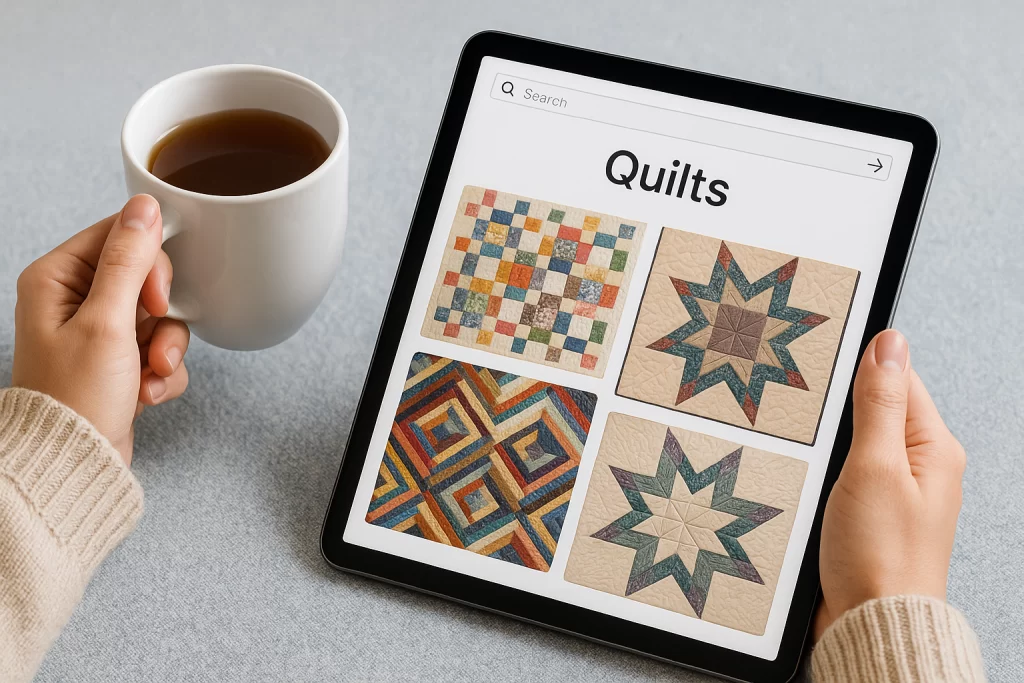
While social media platforms like Facebook and Instagram are fantastic for getting your quilts in front of people, there’s still something special, and trustworthy, about a dedicated website.
Many quilters (myself included!) grew up in a time when a business with its own website felt more established, more “real.” A polished website tells visitors, “This is a legitimate business that cares enough to put its best foot forward.” It’s a place where your customers can learn about you, see your work, and find your contact information without having to scroll through a feed or hunt for old posts.
Social media moves quickly, and posts can get buried in just a few days. But a website is more like a well-organized quilt show: it’s easy to browse, everything is in its place, and visitors can take their time exploring. For customers, especially those who prefer a little more time to decide, that kind of clear, permanent presence inspires confidence and makes them far more likely to reach out.
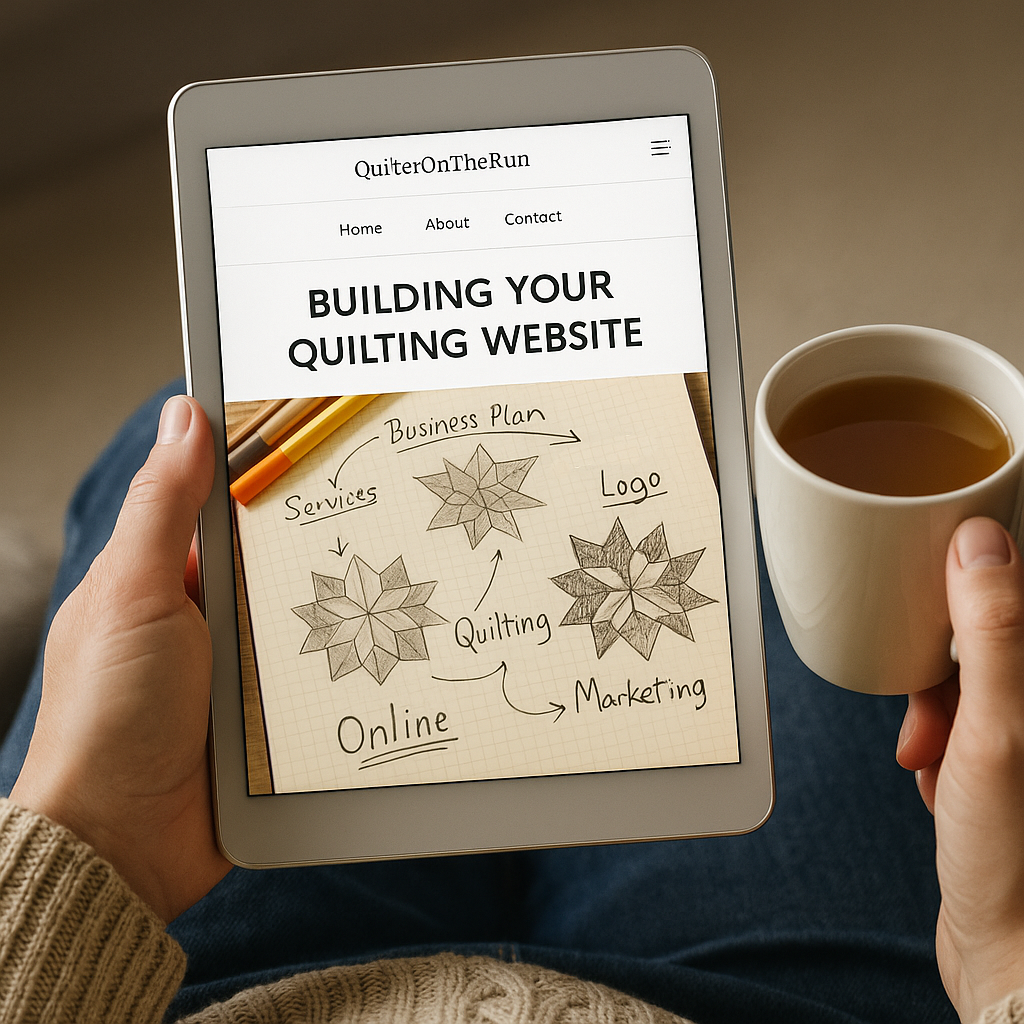
Step 1: Building a Quilting Website
(Even if You’re “Not a Tech Person”)
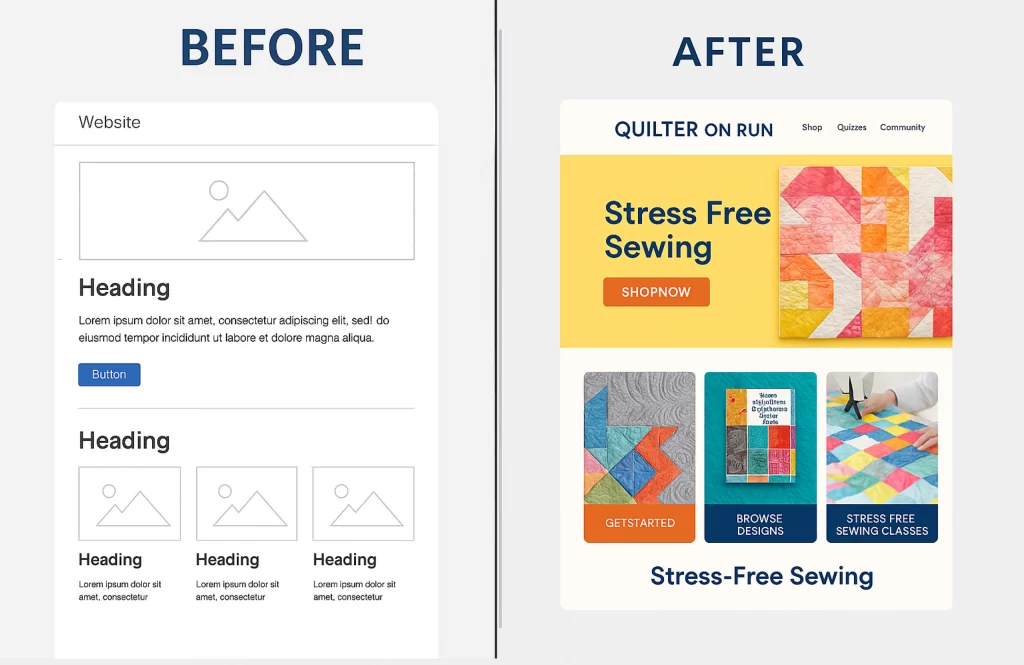
Let’s get one thing out of the way: you do NOT have to be a computer genius to have a professional-looking website.
Confession: I didn’t get a phone that could text until 5-6 years ago, and I still prefer to make actual phone calls. I am also seriously emoji challenged. LOL. My kids have to help me with the DVR. But I built my own quilting website, without pulling my hair out, thanks to modern drag-and-drop site builders.
No coding. No secret programming languages. Just click, drag, and drop.
Picking Your Website Provider
There are hundreds of website providers out there (think Hostgator, Squarespace, WordPress, Bluehost. Before you choose, do a little window shopping:
Visit quilting websites you admire.
Try opening them on different devices (phone, tablet, desktop).
Notice what’s easy to use and what’s frustrating.
This will give you an idea of the style, features, and layout that suit your personality and your business.
💡 Pro Tip: Your website provider will cost about the same (or less) than a year in the Yellow Pages used to (or an add in your local guild newsletter) and it will reach way more people.
Deciding Your Focus
Your website is your storefront, so ask yourself:
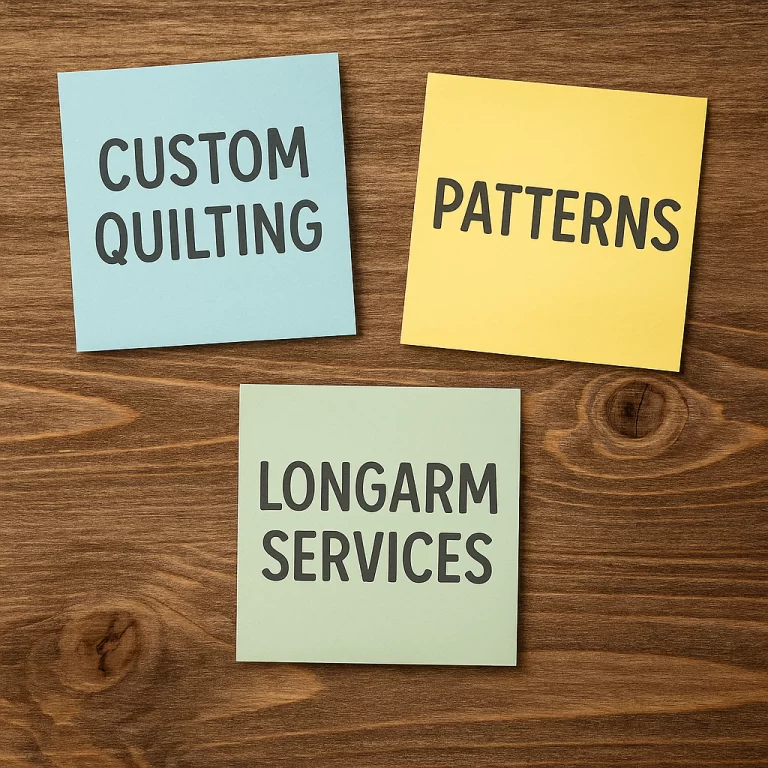
Do I want to sell quilts?
Offer custom longarm quilting services?
Market my own quilt patterns?
Whatever your focus is, make it the first thing people see on your homepage.
Your homepage should include:
What services you offer
Your experience level
How to contact you
And remember the KISS principle: Keep It Simple, Stitcher. Too much text overwhelms visitors; too little leaves them confused.
Understanding Keywords (and Why They Matter)
Keywords are the phrases people type into Google to find what they need. The right ones help your site show up higher in search results.
Example keywords for a custom longarm quilter might be:
“custom quilting”
“hand-guided quilting”
“Kansas City longarm quilter”
Use them naturally throughout your site — in page titles, image descriptions, and your “About” page.
Tip: Use a WordPress plug in like Rank Math or Yoast to easily help you SEO your site.
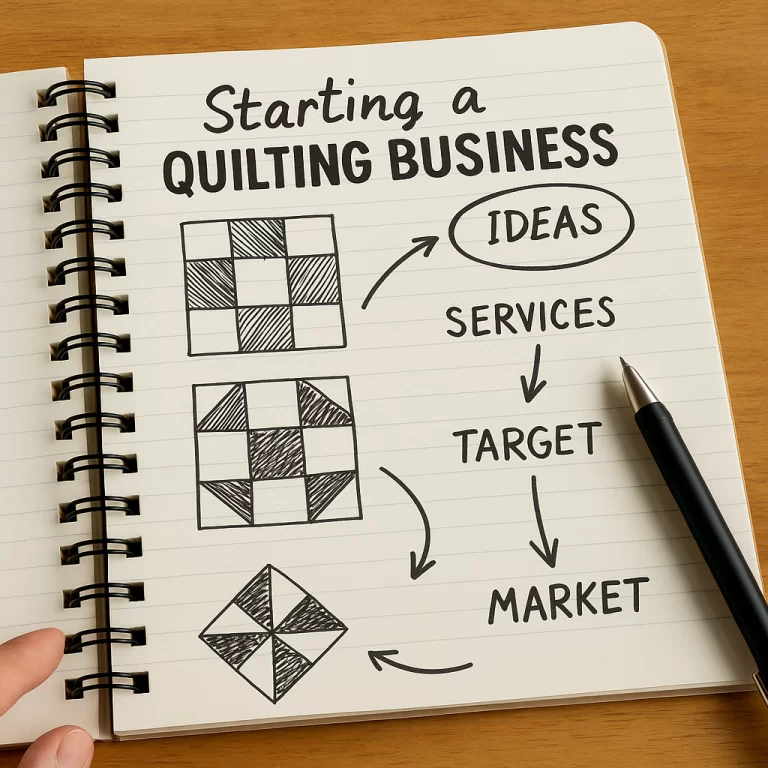
Showcasing Your Work
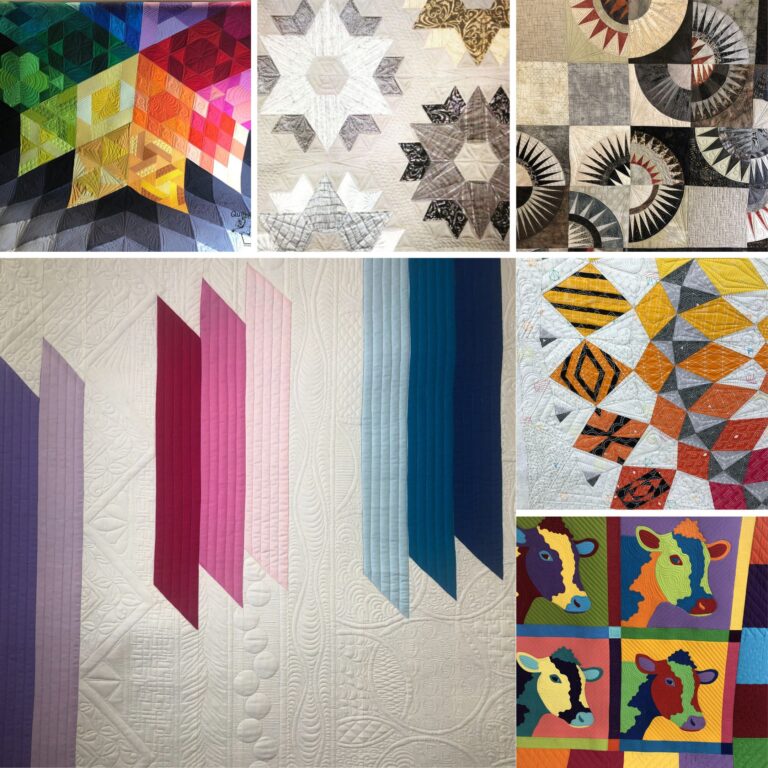
Your site should show your quilting at its best:
Photo galleries of finished quilts
Pricing information (if you choose)
Awards or recognitions
Testimonials from happy customers
If you already use Pinterest or Instagram for quilt photos, link those directly to your site. This saves you from re-uploading every photo and still keeps everything professional.
⚠ Important: Always get permission from customers before posting pictures of their quilts. I include a simple line on my invoices saying I may use quilt photos unless the customer asks me not to in writing.
Publishing and Updating Your Site
When you finish building your site, don’t forget to publish it Otherwise no one will see it. Your hosting service will have a button for this.
Every time you make a change or add something new, you’ll need to publish again. Also, make sure to backup your site on a regular basis just in case.
Regular updates help in two ways:
They keep your site fresh for repeat visitors.
They tell search engines you’re active, which can improve your rankings.
A good quilting website isn’t just “being online”. It’s your 24/7 quilt show, showing customers who you are and why they should trust you with their quilts. Keep it clear, pretty, and easy to navigate, and you’ll give people a reason to click that “contact” button.
Have you started yours yet, or are you still sketching it out? Share in the comments. I’d love to hear what’s working for you (or what’s driving you nuts).
And come back in two weeks for Part 2, where I’ll walk you through using Facebook to get more eyes on your quilts and more customers on your list.
Want to take a business class with me? Check out my teaching schedule to see where I’ll be next.
My Recommended Website Host (and a Special Discount for You!)
If you’ve decided you’re ready to create your own quilting website, I want to save you the trial-and-error I went through. I personally use HostGator for my website, and it’s been reliable, affordable, and easy to manage even for someone who’s more comfortable with a rotary cutter than a computer mouse.
Here’s why I recommend them:
Beginner-friendly tools – Drag-and-drop site builders that don’t require coding.
Affordable plans – Great pricing even before discounts.
Reliable uptime – Your site stays online so customers can find you anytime.
Great support – Real people to help you when you get stuck.
💡 Special Offer: Because I partner with HostGator, you can get 70% off your hosting plan using my affiliate link:
Click here to grab your 70% off deal
It’s a great way to get started without breaking the bank, and yes — using my link helps support me so I can keep bringing you free quilting business tips like this one.
Build Your Quilting Brand Online Build Your Quilting Brand Online Build Your Quilting Brand Online Build Your Quilting Brand Online Build Your Quilting Brand Online Build Your Quilting Brand Online Build Your Quilting Brand Online Build Your Quilting Brand Online Build Your Quilting Brand Online Build Your Quilting Brand Online Build Your Quilting Brand Online Build Your Quilting Brand Online Build Your Quilting Brand Online Build Your Quilting Brand Online Build Your Quilting Brand Online Build Your Quilting Brand Online Build Your Quilting Brand Online