
🧵 How to Avoid Longarm Quilter Burnout and Reignite Your Passion
Feeling burned out as a longarm quilter? You’re not alone. Learn how to rekindle your creativity, stay inspired, and fall in love with quilting all over again.
When I first started quilting for hire, I couldn’t believe how lucky I was to get paid for doing something I loved. Every project was exciting. I took classes constantly, experimented with new designs, and poured my heart into every quilt. But now, nearly fifteen years later, I understand what one of my early instructors meant when she said, “The ten-year mark is when most longarmers burn out.”
I didn’t believe her then. But now? I’ve seen it. Many of the quilters who started around the same time I did are no longer in business. Some left due to physical strain, others from emotional exhaustion, and still others because the spark simply faded. So, what makes the difference between those who quietly pack up their machines and those who continue to show up day after day with joy and purpose?
This post is for every longarm quilter who’s ever felt the weight of burnout—or who wants to avoid it altogether. Whether you’re ten years in or just getting started, here are some real, actionable ways to keep your passion alive.
1. Make Time for Your Own Quilts
One of the most common frustrations I hear from longarm quilters is this:
“I never have time to work on my own quilts.”
When you’re quilting for hire, it can feel like every minute needs to be productive, billable, or dedicated to someone else’s quilt top. But here’s the truth: if you never make time for your own creative projects, burnout isn’t just possible—it’s inevitable.
Your personal quilts are more than just hobby work. They are your space to explore, play, fail, grow, and reconnect with what drew you to quilting in the first place. Neglecting that part of yourself may keep the money flowing in the short term, but it will cost you dearly in creative energy and joy.
How to Actually Make Time:
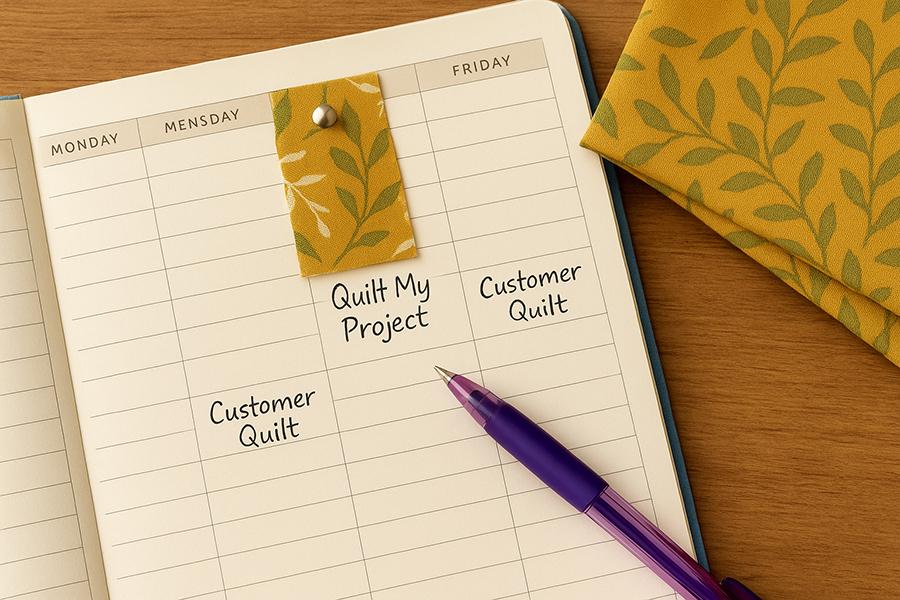
Block time on your calendar just like you would a customer job. Label it “Personal Quilt Time” and protect it.
Say no to taking new client work if your schedule is packed. Your quilt deserves to be a priority.
Set a goal to finish one personal quilt every quarter or season.
You may not be getting paid for those quilts, but you’re investing in the long-term health of your business and your sanity.
2. Challenge Yourself with New Techniques
After years of quilting, it’s easy to find your comfort zone and get stuck in it.
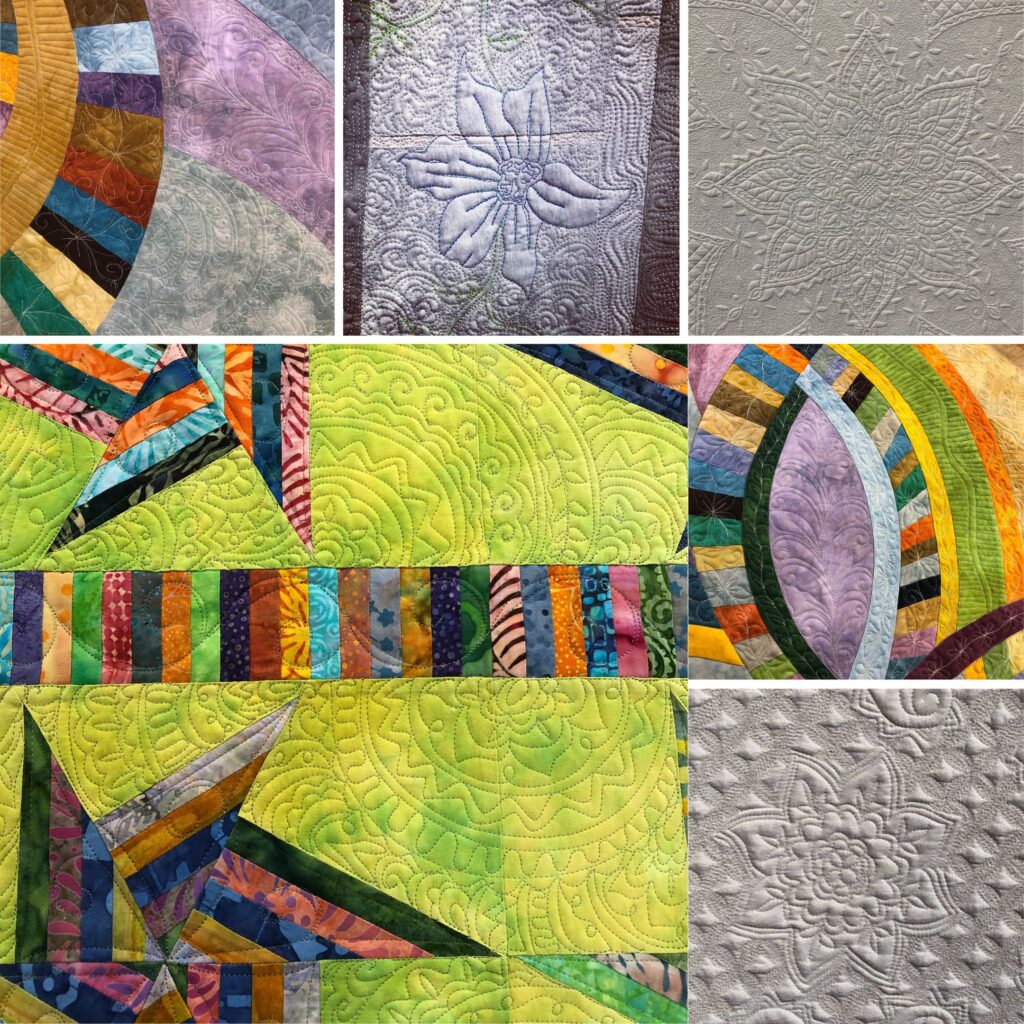
Maybe you have three or four go-to designs. Maybe your muscle memory is so strong you could stitch feathers in your sleep. That’s a testament to your skill, yes. But it can also become a trap.
Creativity thrives on challenge. One of the fastest ways to lose your passion is to stop learning.
How to Keep Growing:
Take a class (in person or online) at least once or twice a year.
Practice a new design motif on muslin sandwiches or practice panels.
Ask your quilting peers what they’re trying lately and challenge each other to try something new.
Explore adjacent crafts like textile dyeing, embroidery, or thread painting to expand your perspective.
Many professionals are required to complete Continuing Education Units (CEUs) to stay sharp in their field. Why should we be any different? Consider self-imposed CEUs an investment in your artistry and your business.
💡 Pro tip: Aim to try one new design or technique each quarter.
Practice Tip: Use felt as your backing fabric. Don’t load a top or batting. The felt “backing” is enough for practice work, and will cost you a fraction of the price of loading a full “sandwich”.
3. Share Your Knowledge: Teach or Mentor
One of the most surprising burnout remedies? Teaching.
There’s something magical about helping someone else discover the joy of quilting. Watching someone else experience an “aha” moment not only reignites your enthusiasm but also gives you a renewed sense of purpose.
Don’t Know Where to Start?
Mentor a new longarmer or help a fellow guild member.
Host a casual workshop or open studio day.
Create a mini tutorial, or blog post, and share it online.
Offer a one-on-one lesson to a curious teen or grandchild.
And here’s the bonus: explaining what you do helps you see your own process with fresh eyes. You may even discover a better, more efficient, way to do something you’ve done a hundred times.
If the idea of teaching a big class sounds intimidating, remember you don’t have to start there. Teaching can be informal. What matters most is the connection

4. Give Yourself Permission to Say No
Here’s a hard truth: not every quilt job is a good fit.
Sometimes a customer wants a thread, design, or material, that stresses you out. Sometimes a personality just doesn’t mesh with yours. And sometimes, even when the job seems good on paper, your gut says no.
Listen to it.
You do not have to accept every job that comes through the door. Saying “no” doesn’t make you unprofessional. It makes you wise.
Set Boundaries That Work for You:
Create a style guide or quilting menu that outlines what you do and don’t offer.
Build in buffer time between projects so you can be selective. (and to help when Murphy’s Law decides to make an entrance.)
Say no politely but firmly. You don’t need to justify your decision to preserve your peace.
Not all business is good business. Some jobs cost more than they pay—in stress, resentment, and time.
5. Take a Real Vacation
Let’s talk about something many self-employed quilters skip: true time off.
Quilt shows, retreats, and conferences are fun, but they’re still work. A real vacation means no machines, no deadlines, and no talk of stitch lengths or thread weights.
If you worked for someone else, you’d get vacation time. So why not give it to yourself?
Plan a Break That Refuels You:
Block out a full week every year just for you.
Leave your sewing machine behind. (Yes, really.)
Do something completely unrelated to quilting: a spa trip, a hiking retreat, a week with family, or by yourself.
Rest is not lazy. Rest is what allows you to keep creating. Don’t wait until you’re so exhausted you’re fantasizing about selling your machine. Plan ahead, and give yourself permission to truly unplug.

Final Thoughts: Reignite and Protect Your Passion
Burnout doesn’t happen overnight. It creeps in quietly. It starts with too many “yeses” and not enough time for yourself. It shows up as irritation, creative blocks, or a vague feeling of dread when you walk into your studio.
But the good news? It’s reversible.
You can love longarm quilting again, just like when you first started. You can protect your creativity, your energy, and your joy. It just takes intention.
Quilt for yourself.
Try new things.
Share what you know.
Set boundaries.
Take breaks.
These aren’t luxuries. They’re essential.
💬 Your Turn:
How do you stay excited about longarm quilting? Have you ever hit a wall? What helped you get past it?
Drop a comment below and let’s support each other. Your story could be just what someone else needs to hear.
Make Your Sewing Room Your Happy Place
A cluttered or uncomfortable workspace can drain your motivation fast. Set up a studio that fuels your creativity with these simple layout, lighting, and ergonomic tips.
Read the Studio Setup Tipsavoid longarm quilter burnout
avoid longarm quilter burnout
avoid longarm quilter burnout
avoid longarm quilter burnout
avoid longarm quilter burnout
avoid longarm quilter burnout
avoid longarm quilter burnoutv
avoid longarm quilter burnout
avoid longarm quilter burnout
avoid longarm quilter burnout
avoid longarm quilter burnout
wow Kris, such words of wisdom! I am sharing this post with all my longarm friends. I think we all need to hear this – especially the “just say no” part. Thanks
Thank you. No is such a simple word,and yet we have so much trouble saying it; myself included. Thanks for sharing the post.
Great Post. Lots to think about. As an AQS “vacationer”– that really resonates.
So glad you liked it.
great post with lots of good advice. I haven’t “burned out” yet, but hit a real block when I moved my studio, followed by repairs on my machine. I went without long arm quilting for close to 10 months (oh, and I still work full-time at another job). I have a really great friend send me a quilt top near the beginning of that 10 months. When I finally got around to quilting it, I had a block. I wasn’t comfortable in my new studio or with the changes to my machine. I’ve never had such a difficult time deciding what to quilt on a quilt top. Finally got into my groove, and it is just about done. I’m looking forward to more quilting projects. I will probably re-take some of your classes as I never got a chance to practice after taking them at the KCRQF show in 2023.
Thank you. I totally understand where you’re coming from.It took me quite a while to get used to my new studio,when I moved to KC. Would love to see pictures of the quilt. Hope to see you at a class soon.
I have the burnout. I have had many life changes (deaths) the last few years and have had to change my whole life. I had a very bad experience with a customer that really challenged my faith in quilting for others. I used to get so excited looking at a quilt and letting it tell me what and how to quilt it. Now I am not inspired. I am going to try following your suggestions to love quilting again.
I’m sorry to hear that. I lost my father 3 years ago and it made it hard to want to be happy and creative. It was kind of like exercising. I made myself go to the studio, and after I was working for a while I would start to enjoy it most days. If I worked for 1/2 an hour and still wasn’t feeling it, I went and did something else. I wish you luck. Feel free to reach out,even if it’s just to have someone to whinge to.