Are You an Artist or Artisan? Rethinking Skill and Creativity in Quilting
The Changing World of Quilting
Recently, I was showing a non-quilter a quilt I was preparing for an upcoming show, and they said, “Well, that’s not the kind of quilt my grandmother would’ve made.”
You know what? They were right.
It wasn’t a traditional quilt in way shape or form. But it was still a quilt, wasn’t it? That comment stuck with me, and later, while catching up on a few Facebook quilting group, I came across several posts about how quilting is changing, why people enter shows, and whether the overall level of workmanship has gone up or down. All of that got me thinking about what that person had said… and what it really means to be a quilter today.
Am I an artist or an artisan?
So, what’s the difference?
We tend to use those words interchangeably, but they actually describe two very different things.
An artist is usually someone using their creativity to express something—emotion, story, or message—through their work. They might use many mediums, combine materials, or bend the “rules” to get their point across.
An artisan, on the other hand, is someone who has spent time and effort mastering a particular skill. They focus on the craft—the precision, the technique, the form.
And if we’re being honest, most quilters I know walk the line between the two.
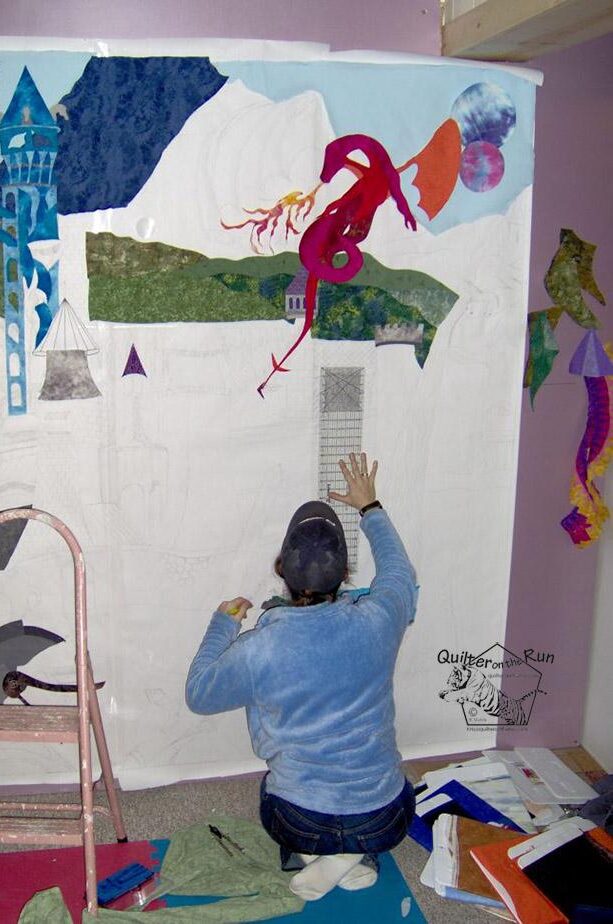
Why do we enter shows?
Everyone has their reasons.
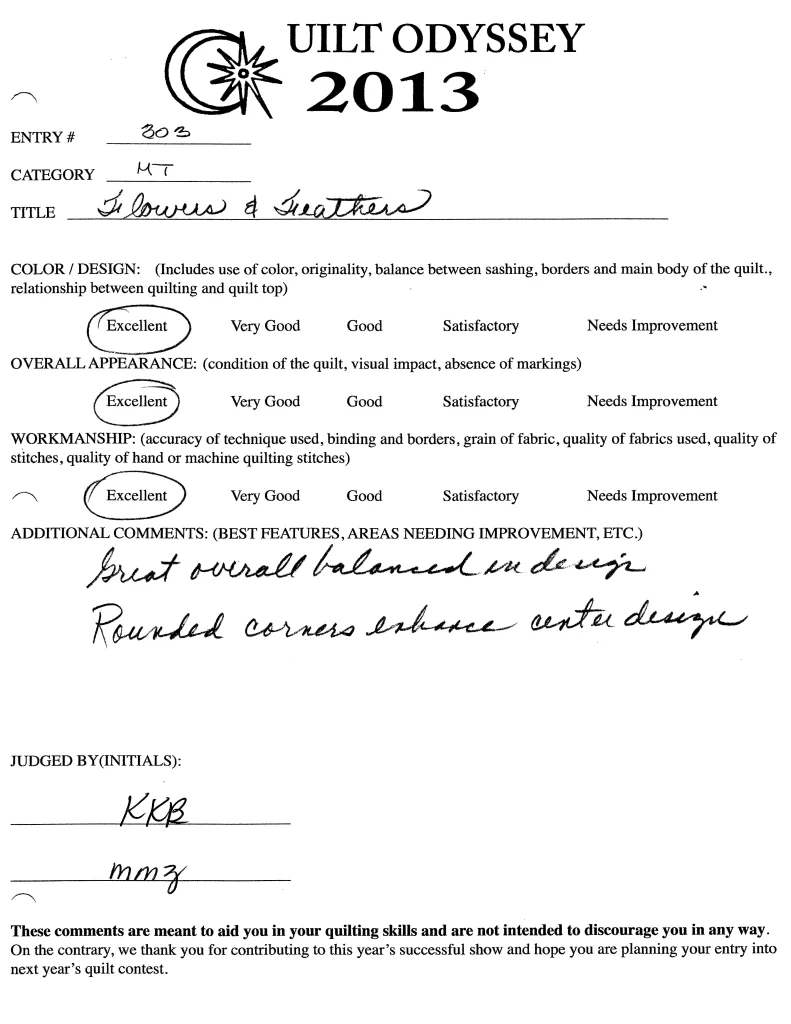
Some want feedback from judges.
Some love the thrill of seeing their work hanging at a national event.
Some just need the motivation of a deadline to finish a project. (Me)
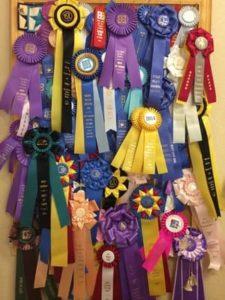
And yes, some of us would like a ribbon (or some prize money) once in a while too.
And let’s be honest show quilting isn’t cheap. The materials and labor are just the beginning. You’ve also got entry fees, shipping, insurance, and in some cases, travel. A ribbon can feel like a return on investment, even if it’s just validation for your hard work.
I’ve found that my traditional quilts tend to do better at shows, but I still enter my art quilts. Why? Because I love them. And because the money I’ve won from traditional quilts lets me keep making the art quilts that speak to me creatively.
It’s not either/or—it’s a balance.
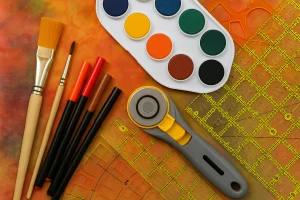
Where do I fall?
I’ve spent years perfecting my piecing and appliqué. I teach machine quilting. I’ve had traditional quilts do well in shows. That definitely sounds like an artisan.
But I also draw my own patterns, dye fabric, paint on fabric, and make pictorial quilts that don’t always fit into any neat category. I’ve entered some of my art quilts in show after show; not because I thought they’d finally win something, but because I loved them. I loved what they said, and how they made other people feel.
So maybe I’m an artist, too.
And I don’t think I’m alone in that.
What about the skill debate?
In those Facebook threads I mentioned earlier, there were some strong opinions about whether quilting skill has gone up or down in recent years.
Here’s my take:
The level of workmanship today is incredible.
These days, entire categories are full of ribbon-worthy quilts. It used to be that one or two would stand out. Now it’s hard to choose.
So why do people still question the level of skill?
I think it goes back to how we define skill.
Traditional quilting puts a lot of weight on:
Sharp points
Perfect seams
Clean curves
Consistent stitch length
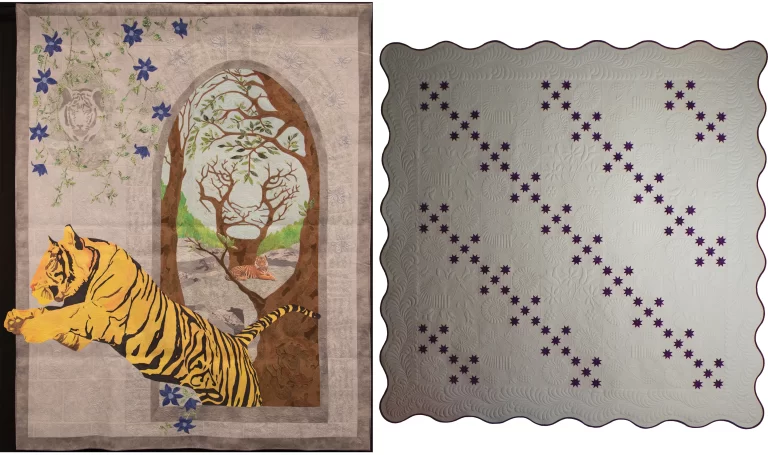
Whereas art quilting may prioritize:
Composition
Emotion
Storytelling
Impact
- Neither one is better. They’re just different. And comparing them side by side in the same show category? That’s not always easy; or fair.
Apples and oranges
Two Lone Star quilts can be compared on points, piecing, and quilting. That’s pretty straightforward.
But two art quilts? One might be covered in dense thread painting and photo transfers; another might use raw-edge collage, mixed media, or even have sections intentionally unquilted. What stands out is how they feel, not how precise the seam allowance is.
That’s not to say workmanship doesn’t matter—it absolutely does. But the skillset is different, and that makes judging across styles tricky.
If the judging criteria isn’t transparent, it can lead to confusion, disappointment, or even frustration. Especially when someone feels like their hard work wasn’t acknowledged or understood.

Conversation is good for quilting
We don’t grow without conversation. It’s never okay to publicly tear down someone’s work. That’s not what this is about. But respectful critique and thoughtful discussion? That’s how we evolve.
Most creative fields have it: film critics, book reviewers, food writers. And even a “bad” review can spark a new idea or help someone see things in a different way.
Maybe that’s the way forward for quilting too.
I love traditional quilts. I love the craftsmanship, the structure, the discipline. But I also love that modern quilting is expanding what’s possible and what a quilt can be.
So… artist or artisan?
Maybe the best answer is both.
What’s the solution?
Should we separate shows by technique—pieced, appliqué, art?
What about quilting method—longarm, domestic, hand? Do we need more specialized shows like Quilt National and QuiltCon?
Or fewer, but with clearer guidelines?
And what about quilts that blend both styles? Traditional piecing and art techniques? Where do those go?
There’s no perfect system. But I do think it’s important that we keep talking about it.
Join the conversation
I’d love to hear what you think:
Do you consider yourself an artist, an artisan… or a little of both?
What do you want to see from quilt shows in the future?
Have you ever entered a quilt you knew wouldn’t win—but just loved it too much not to share?
Leave a comment below. And while you’re here:
📬 Subscribe to my blog for more honest conversations about quilting, creativity, and staying inspired.
🛍️ Browse my shop for tools, patterns, and digital downloads.
🎓 Check out my classes if you’re ready to sharpen your skills or try something new.
Thanks for reading—and thanks for being part of this evolving, beautiful, and sometimes messy world of quilting.
artist or artisan artist or artisan artist or artisan artist or artisan artist or artisan artist or artisan artist or artisan artist or artisan artist or artisan artist or artisan artist or artisan artist or artisan
artist or artisan artist or artisan artist or artisan artist or artisan artist or artisan artist or artisan artist or artisan artist or artisan artist or artisan artist or artisan artist or artisan artist or artisan
Maybe you’re new to the longarm business, maybe you have been working at longarming for a long time and want to expand your business or maybe you are looking to highlight your custom work to people outside your local area. You’ve gone to all the guild meetings, done the show and tell, talked to local quilt shops and even taken out some local ads, so where do you go from here? Today’s market is all about social media and having an online presence. A recent study found that over 70% of people no longer use phone books and more than 85% of people use the web to find goods and services. Over 70% of my customers found me online; not really surprising given today’s age of smart phones, and Wi-Fi hotspots providing instant access to anything you want to know at a moment’s notice. If you are looking to expand your business, you need take advantage of this trend and direct customers your way. Two of the best and easiest ways are having a website and using Facebook.
Now you may be thinking that there is no way you are tech savvy enough to build a web page so before I start talking about how easily you can start a website I have a confession to make. I am not a tech geek. In fact, I am about as far from it as you can get. I have a dumb phone that only makes phone calls, I wouldn’t know how to text if my life depended on it, and my children have to help me program the DVR. That being said, I can and did build my own site and it didn’t even involve pulling my hair out. Today’s sites are all about plug and play. You no longer need to know anything about code or special computer language. All you have to do is use your mouse to drag and drop.
The first step to building your website is finding a provider. There are hundreds available and with prices that vary wildly depending upon the size of the site you want to build, whether or not you want to allow advertising, and how much of the design you want them to do for you. Most web site providers are very competitive with what you would pay for a year of yellow page ads. My personal recommendation is to look at sites of other quilting business you may know and see which ones suit your style. Try opening the site on a variety of devices. Some sites work better on computers than with smart phones or Ipads. Different providers open sites differently. Also, some sites may work differently on one web browser than on another. Fifteen to twenty minutes of playing on different sites should give you an idea of what you do and don’t like.
I’d say I’m an artisan. Wish I had some artist characteristics but don’t. My brain doesn’t work that way. I have entered quilts in our guild show which uses certified judges. We have many different categories and last year had a three different critique sheets to address some of the unique characteristics. I enjoy entering and seeing my quilts hanging and talking with all my friends.
Artistic characteristics can be learned. It’s just time and practice. All that really matters is you are having fun.
I am both. I am just now starting to get into the art quilt stage. I like to enter shows because I will try harder on the quilt I will be showing. I ask myself “What can I do to make this quilt stand out.?” I have won some prizes. One Year at Road I got 2 second places. I didn’t know I won until I got there. Compared to the ones that got first, I thought mine were exceptionally better. I find that judging also has opinions’, Just like peoples’ choice. I gave up “expecting” to get people’s choice at our local shows even though I won a prize in a national show. I do have 2 styles of quilting. The giveaways I will do fast and try to get good but I don’t agonize over little mistakes. My show quilts, I will take apart large areas if I don’t like the outcome. I took a class from you at Quilt Wyoming. I saw your write-up on machine sewing EPP together. I was curious so I took the class but I said I would never, ever sew my EPP with a machine. I haven’t sewn on by hand since then. I have won several awards for quilts using your method.
Congratulations that’s a real accomplishment and you are most correct. Judges definitely have their own opinions and preferences. Thanks for taking a class with me. I’m thrilled to hear some of my techniques have been of help. Happy Quilting
I’m definitely an artisan. I’ve been perfecting the precision of my quilting for almost 50 years. I’m great with fabric selection and my machine quilting is getting pretty darn good. But, I do not consider myself an artist. I wish I was an artist, to be able to compose your own work must be such a gift. This fall I joined a local modern art guild in the hopes that it would introduce more flexibility into my work. The outcome is yet to be seen, but I do feel like there is room for me to dabble…..to be brave……..to not worry that a piece doesn’t “look like something you would do.” My spouse is confused (he loves the more traditional me) but trying to be supportive. I may find that I always remain an artisan, but perhaps I will be a more well rounded one.
Being an artist is just a state of mind. You can teach yourself theory and composition, but what really matters is you are having fun with what you do. PS Confusing your spouse is one of the joys in life. I am constantly confusing mine. LOL I encourage you to keep being brave, it’s the only way to continue growing.
More artisan but some of both. I feel there is always room for people to express themselves. I enjoy seeing all the ideas.
I agree. I like seeing all the different ideas others come up with.